The launch range
Six ways to put your brand in people’s hands
A focused starter range. Every item can be branded with your logo — send us artwork, or let our studio create it.

A focused starter range. Every item can be branded with your logo — send us artwork, or let our studio create it.
Staff onboarding kits, client gifts and branded office kit that keeps your name on the desk.
Branded gifts, prize-giving keepsakes and fundraising items for the whole community.
Delegate packs, conference giveaways and speaker gifts, ready for the date on your run sheet.
Weddings, birthdays, clubs, or just because — if you want your name, logo or face on it, we’ll print it.
If we get it wrong, we make it right. Simple as that.
Our studio can build the artwork, so you don’t need a separate designer.
Local production and quick lead times keep your deadline on track.
Southern Suburbs based, so proofs and pickups are easy.
Tell us which items you want and roughly how many.
Supply print-ready artwork, or brief our studio to create it.
Sign off the proof and we handle production and delivery.
Send us the details and we’ll put a quote together.
Every order is quoted so you get the right price for your quantity.
Sublimation printing uses heat and pressure to turn dye into a gas that bonds into a polyester or polymer-coated substrate. The image becomes part of the material rather than a coating on its surface, which is why it produces photo-quality, full-colour results that don’t crack, peel or fade.
Polyester and polyester-rich textiles, polymer-coated metals, ceramics, and flame-retardant polyester mesh. Light-coloured substrates give the truest colour reproduction.
The process runs at roughly 190°C to 200°C. Standard uncoated plastics melt or deform at those temperatures. Those items need UV or pad printing, which works at low heat and places logos precisely on rigid synthetic surfaces.
No. Because the dye infuses the substrate rather than sitting on top of it, there’s no printed layer to lift, crack or wear away.
Yes. Gloss produces punchy, high-contrast colour; matte gives a smoother, low-glare finish. We’ll recommend one based on your artwork if you’re unsure.
Either — whichever you prefer. The launch range can be ordered directly online, with volume breaks at 5, 10, 25, 50 and 100 units, or you can request a quote first and talk through quantities, artwork and finishes before you commit. We want you comfortable either way.
Yes. Our in-house design studio can build print-ready artwork from a logo, a rough concept or an existing brand guideline.
We’re at 151 Campground Road, Newlands, Cape Town — opposite the Newlands cricket ground. Collection is easy for anyone in the Southern Suburbs, and we deliver across Cape Town. More about TopInc, printing in Newlands since 1987.
Think about where a marketing budget usually goes. A digital ad rents someone’s attention for a few seconds and then it’s gone — scrolled past, blocked, forgotten by lunchtime. You paid for a moment, and the moment ended.
Now picture a custom mug on that same person’s desk. It’s there when they arrive. It’s there through every meeting, every coffee, every deadline. It’s there tomorrow, and next week, and — if it’s a good mug — a year from now. You didn’t rent a moment. You put your name into someone’s daily routine, and it keeps working long after the invoice is paid. That’s the quiet power of a promotional product done properly: it’s the rare piece of marketing people choose to keep.
Someone keeps a branded object for two reasons, and you need both.
The first is that it’s genuinely useful. A good bottle, a pen that actually writes, a mug the right size for a real cup of coffee — useful things earn a place on the desk. Useless things earn a drawer.
The second is that it carries something the recipient identifies with, and this is the part most branded merchandise misses entirely. A logo stamped on a mug is advertising. A personalised mug carrying a message someone genuinely connects with — their team, their values, an in-joke only their department gets, or simply their own name — is something else. They don’t tolerate it; they display it. The moment an object says something a person is glad to be seen holding, you’ve stopped interrupting them and started giving them something they want to own.
Get both right and the recipient becomes something no media budget can buy: a willing carrier of your brand. Every time they lift that branded bottle in a meeting or leave that mug in a shared kitchen, your name is shown to their audience, with their implicit endorsement, in a setting no advert could reach. You didn’t pay for that placement. They gave it to you — because you gave them something worth keeping.
Marketing’s oldest truth is that people act on the names they see most often. An everyday object is, by definition, seen every day. Used through a working year, that’s a great many mornings your name spends in front of the same person — not as an interruption they’re trying to skip, but as a fixture of a space they control. Very little else in a marketing budget compounds quite like that.
There’s a catch, and it’s the reason the rest of this page matters. All of it collapses if the print doesn’t last. A logo that cracks, peels or fades after two months doesn’t build a brand — it advertises that someone cut a corner, every single day, right in front of the person they were trying to impress. The everyday-exposure argument only holds if the object still looks the part a year in. Which is exactly why how it’s printed matters as much as what you print it on.
Most branded merchandise is printed onto something. Sublimation works the other way round. Under heat and pressure the dye turns to gas and bonds into a polyester or polymer-coated surface, so the image becomes part of the item rather than a layer resting on top of it.
There’s a simple test for this. Run your thumb across a sublimated mug and you feel ceramic. Run it across a screen-printed one and you feel the ink. That single difference is why sublimated promotional products don’t crack, peel or fade the way vinyl and transfers eventually do — there’s no edge to lift, and nothing sitting on the surface to wear away. In other words, it’s the printing method built for exactly the year-long lifespan your branding needs.
Full-bleed, edge-to-edge colour. Not a 40mm logo patch marooned in the middle of a mug. The whole printable surface, with gradients, photographs and fine detail holding together at high resolution. If your brand lives on a photograph or a colour blend — or on a message you want people to actually read — this is the only promotional printing method that will do it justice.
Permanence that isn’t a marketing word. Because the dye infuses the substrate rather than coating it, personalised branding will not crack, peel or fade over time. A branded bottle that still looks new after a year is doing its job. One with a logo flaking off the side is doing the opposite of its job, rather publicly.
A finish you actually get to choose. Gloss gives punchy, high-contrast colour. Matte gives an elegant, low-glare, smooth look. Most suppliers never raise it. We do, because the same artwork reads like two different pieces of branding depending on which you pick.
Sublimation needs real heat — roughly 190°C to 200°C — and real pressure. That rules certain products out, and it rules them out permanently.
Standard uncoated plastics don’t survive the process. Power banks, USB drives and most tech casings warp, soften or discolour long before the dye ever bonds. So if a supplier takes your order for sublimated power banks without blinking, that’s worth a second look. Those items want UV or pad printing instead — a different process on different equipment, and a perfectly good result once it’s on the right machine.
Sublimation belongs to polyester-rich fabrics, polymer-coated metals, ceramics and flame-retardant polyester mesh. That’s the list. Everything else is a conversation about a different printing method, and we would much rather have that conversation before your artwork is signed off than after your delivery date.
There’s a second constraint worth knowing before you brief anyone. Sublimation dye needs a light-coloured blank underneath it. White and pale substrates return the colours you designed; dark ones don’t. That isn’t a limitation so much as a division of labour — dark fabrics are precisely the job screen printing exists to do.
| Printing Method | Compatible Substrates | Key Strengths |
|---|---|---|
| Sublimation | Polyester textiles, coated metal, flame-retardant mesh, ceramics | Photo-quality, full-bleed, extreme durability, no texture/peeling |
| UV / Pad Printing | Standard plastics, tech casings (USB/Power banks), silicone | Low heat, precise logo placement on rigid synthetic surfaces |
| Screen Printing | Cotton, dark fabrics, basic flat items | Cost-effective for high-volume simple line artwork |
Choosing correctly at the briefing stage is most of the battle. Choosing incorrectly is how branded merchandise ends up in a store cupboard instead of on a desk.
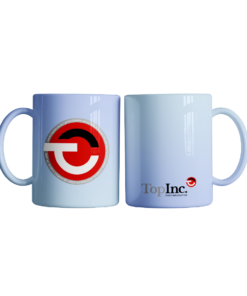
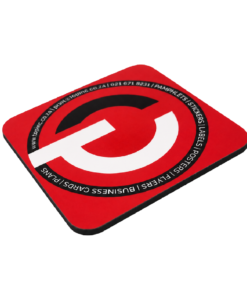
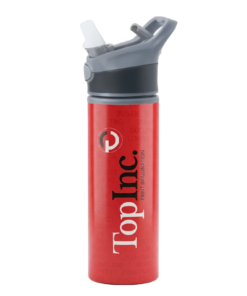
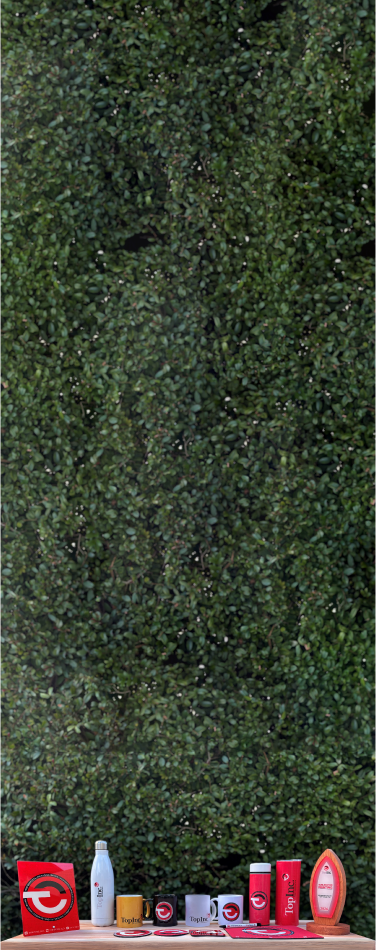
Our launch range is deliberately tight — six items we can produce properly and consistently, rather than a forty-page catalogue we’d have to source from three provinces. Every one can be customised with your logo, your colours and a message your people will actually identify with:
Every item can be ordered online in the quantities you need, with volume breaks at 5, 10, 25, 50 and 100 units — or start with a quote first if you’d rather. Either way, send print-ready artwork or brief our in-house design studio to create it — the design department is upstairs from the printers, which removes the usual week of files bouncing between two suppliers.
Sublimation as a technology reaches further than these six — polyester apparel and sportswear, tote and drawstring bags, aprons and kitchen textiles, travel tumblers, and flame-retardant mesh banners that let wind pass through instead of behaving like a sail on a construction hoarding. If you want a custom or personalised item beyond the launch range, ask. We’ll tell you honestly whether it’s a sublimation job, a different process, or something you shouldn’t be spending money on at all.
Simple orders shouldn’t need a phone call, so the launch range is available to order directly online. But branded gifts often come with questions — how many, which finish, whether the artwork will work, what actually suits the occasion — and there’s no need to commit before those are answered. You’re just as welcome to request a quote first, talk it through with us, and only place the order once you’re comfortable. Order online for speed, or start with a quote to think it through — we want you comfortable either way, and we’d genuinely rather you were sure than quick.
Corporate gifts and staff merchandise. Onboarding kits, client gifts and desk items that reinforce your brand every working day. A welcome pack built around a personalised mug and a branded bottle sits in a new hire’s daily routine from week one — and holds up far better than the printed-tote-bag school of corporate gifting. This is corporate gifting that keeps giving, long after the handover.
Schools. Prize-giving keepsakes, fundraising gifts and branded items for the whole community. A personalised mug or bottle carrying the school crest is the kind of thing families keep and use — which is rather the point. Southern Suburbs schools are ten minutes away, which makes proof approval a walk rather than a courier.
Events companies. Delegate packs, conference giveaways and speaker gifts, produced against the date on your run sheet rather than a hopeful estimate. A branded bottle a delegate keeps is a giveaway that carries your event’s name home and onto their desk — long after the lanyard’s in the bin.
Client gifts, hospitality and sport. Custom coasters for guest rooms and open houses; personalised bottles and breathable branded kit for teams and race participants. The common thread is utility — an item someone actually uses is an item your name stays attached to.
Outdoor and construction sites. Flame-retardant polyester mesh banners carry large-format graphics across a perimeter while staying within site safety requirements, and let wind through instead of fighting it. For the rigid and large-format side of the same job, see our signage and large-format printing.
Four questions, and they’re worth asking us as readily as anyone else: